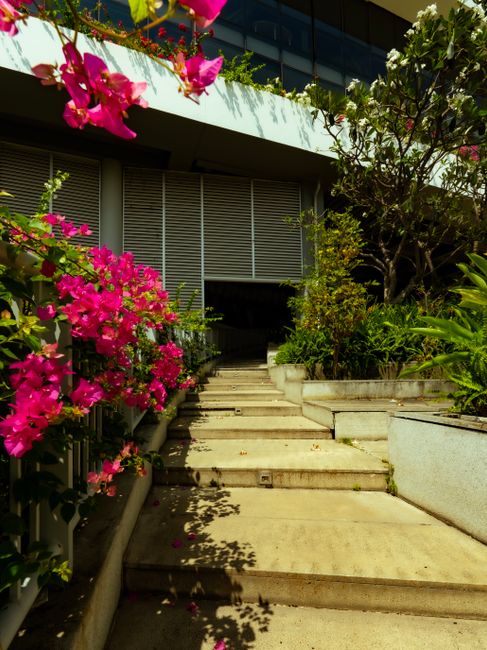
Southbank Terrace Garden Guide for Local Gardeners in Upper Ground
If you live or work around Upper Ground, you already know the terrace gardens in this part of Southbank can be a lovely bonus and a bit of a headache at the same time. They get wind, reflected heat, shade from buildings, and the usual London problem of "where on earth do I put the compost?" This Southbank terrace garden guide local gardeners for Upper Ground is designed to help you make sense of it all without overcomplicating things.
Whether you are starting with a bare terrace, trying to revive a tired planting scheme, or simply keeping a compact outdoor space looking good through the year, the right approach matters. You will find practical advice here on layout, plant choice, maintenance, safety, and when it makes sense to bring in a local expert. Nothing fluffy. Just the stuff that helps a terrace garden actually work in real life.
There is also a simple truth behind all of this: terrace gardens are only impressive when they are designed for the space they sit in. On Upper Ground, that usually means balancing privacy, drainage, weight, and weather exposure. Easy to say. Less easy when your planters keep drying out by Thursday afternoon.
Table of Contents
- Why Southbank terrace garden guide local gardeners for Upper Ground Matters
- How Southbank terrace garden guide local gardeners for Upper Ground Works
- Key Benefits and Practical Advantages
- Who This Is For and When It Makes Sense
- Step-by-Step Guidance
- Expert Tips for Better Results
- Common Mistakes to Avoid
- Tools, Resources and Recommendations
- Law, Compliance, Standards, or Best Practice
- Options, Methods, or Comparison Table
- Case Study or Real-World Example
- Practical Checklist
- Conclusion
- Frequently Asked Questions
Why Southbank terrace garden guide local gardeners for Upper Ground Matters
Upper Ground is not a suburban back garden environment. It is dense, built-up, and exposed in ways that people often underestimate. A terrace may look simple from the inside, but outside it can behave like a small rooftop ecosystem: hot pavements in summer, gusty corridors between buildings, patchy shade, and limited space for storage or bulky tools. That combination changes everything.
A good terrace garden guide matters because it stops you making expensive or annoying mistakes early. For example, a planter that looks elegant in a showroom may become a waterlogged brick in winter. A climbing plant that seems ideal for privacy may outgrow its support and start causing conflict with railings or neighbours. And yes, the maintenance bill can creep up if the planting design is not realistic.
For local gardeners, the point is not to create a perfect magazine garden. The point is to create a terrace that feels calm, usable, and easy enough to maintain week after week. In our experience, the best results come from modest, well-chosen decisions repeated consistently. That sounds boring. It usually works brilliantly.
There is also a local rhythm to terrace gardening around Southbank. People often want something that looks good from spring through late autumn, provides a bit of softness against hard architecture, and can cope when everyone gets busy. A practical plan saves time, water, and a fair bit of irritation.
If your outdoor space sits alongside decking, paving, or shared access routes, it may also be worth thinking about landscape gardening support or broader landscaping input so the whole space works as one system rather than a collection of separate bits.
How Southbank terrace garden guide local gardeners for Upper Ground Works
The guide works by breaking a terrace garden into the practical parts that actually affect performance: exposure, structure, planting, irrigation, access, and ongoing care. Once those are clear, the rest becomes much easier to decide.
First, you assess the site. How much sun does it get? Is it windy at roof level? Does the terrace dry quickly after rain, or sit damp in shaded corners? A north-facing terrace can be surprisingly tricky, while a west-facing one may roast by mid-afternoon. The answer influences everything from pot choice to plant selection.
Next comes the structure. On Upper Ground, many terraces benefit from a light-touch layout: a few strong focal containers, seating that does not dominate the space, and planting that adds depth without blocking movement. If the terrace is already cluttered, a quick garden clearance can be the most sensible starting point. People often skip this and jump straight to buying plants. That is how you end up with no room to walk and three spare lavender plants balanced on a milk crate.
Then you look at planting strategy. Terrace gardens usually do better with a mix of evergreen structure, seasonal colour, and one or two statement plants rather than lots of tiny species. It is less chaotic and easier to maintain. A little repetition helps too. Repeated containers or repeated foliage shapes make compact spaces feel intentional rather than crowded.
Finally, the guide turns into a maintenance routine. That part is important. A terrace garden is not a one-off project. It needs watering, trimming, feeding, checking for wind damage, and the occasional hard reset. A reliable garden maintenance plan keeps it from slipping into that slightly untidy stage where you keep meaning to deal with it, but somehow never do.
Key Benefits and Practical Advantages
Done properly, a terrace garden offers more than a pretty view. It can change how a property feels and how you use it day to day.
- Better use of limited space: careful planning lets even a narrow terrace feel layered and usable.
- Privacy and comfort: well-placed planting softens sightlines and cuts the "all concrete, all the time" feeling.
- Improved atmosphere: greenery changes sound, light, and mood in a way that hard surfaces never can.
- More reliable maintenance: a simple system is easier to keep up than a complicated one.
- Seasonal interest: the space can look good across the year, not just during a short peak period.
- Better resale or tenant appeal: a well-kept terrace often helps a property feel more complete and cared for.
There is a practical side too. When planting, drainage, and access are planned together, you reduce the chance of damaged paving, stressed plants, or messy overwatering. A terrace garden should feel easy to look after, not like a weekly rescue mission.
If you are balancing beauty with utility, simple materials matter. Durable containers, stable trellis supports, and sensible surfaces can save time. The same goes for edging and seating zones. If a terrace includes timber features, you may want to think about decking services as part of a wider layout rather than an isolated add-on.
Who This Is For and When It Makes Sense
This guide is for anyone trying to make a terrace garden work in a real London setting, especially around Upper Ground and the Southbank area. That includes homeowners, flat owners, landlords, tenants with permission to improve outdoor space, and property managers looking after shared terraces.
It makes particular sense if:
- your terrace feels too exposed or too bare
- plants keep failing for no obvious reason
- you want more privacy without building a screen that looks harsh
- the space is hard to water or maintain regularly
- the layout is cluttered and needs simplifying
- you are preparing a terrace for long-term use, sale, or letting
It also makes sense if the garden feels "almost there" but not quite. That is a common stage. The structure might be okay, but the planting lacks coherence, or the maintenance is inconsistent. A focused reset can often fix this without a full redesign.
To be fair, not every terrace needs a professional overhaul. Some only need better plant choices, a cleaner layout, and a routine that fits real life. But if you are dealing with awkward access, heavy containers, or a tired design that keeps underperforming, local help is often worth considering. You do not have to do everything yourself.
Step-by-Step Guidance
Here is a practical way to approach a Southbank terrace garden without getting lost in the weeds. Literally.
- Measure the usable space. Mark where people need to walk, sit, and store items. Don't design around the whole terrace if half of it needs to stay clear.
- Note the conditions. Observe sun, wind, and shade across the day. A terrace at 9am can feel very different by mid-afternoon.
- Check drainage and surfaces. Water should move away properly. If not, you may need adjustments before introducing more plants.
- Decide the main purpose. Is the terrace for entertaining, quiet planting, privacy, growing herbs, or a mix of all four?
- Choose a limited palette. Pick plants that suit the exposure and that work together visually. Too many species can make the space feel fragmented.
- Plan containers with weight in mind. Large pots are useful, but heavy planters can be a problem on terraces and upper floors.
- Set up watering access. Make sure watering is realistic in summer. A thirsty terrace can become a daily chore very quickly.
- Build in maintenance. Schedule pruning, feeding, and tidy-up work so the garden stays attractive, not just alive.
A useful way to think about it is this: structure first, then planting, then maintenance. If the order is reversed, you may spend more time correcting problems than enjoying the space. And nobody wants to carry a heavy planter twice because the first position looked nice but did nothing for the garden.
If the terrace includes mature shrubs or small trees that have outgrown their space, targeted tree lopping and removal may be part of the wider solution, although that should always be approached carefully and with proper judgement.
Expert Tips for Better Results
A few details make a big difference on terrace gardens. They are not flashy, but they save time and make the whole thing look more composed.
Use repetition to calm the space
Repeated pot shapes, repeated leaf textures, or a repeated colour family creates visual rhythm. On a small terrace, that rhythm matters more than variety for variety's sake.
Choose plants that hold their shape
Loose, floppy planting can look lovely in a border, but on a windy terrace it may quickly look untidy. Plants with stronger form tend to age better in exposed spaces.
Think about winter as much as summer
Many people plan for July and forget February. Evergreen structure, containers with winter presence, and robust materials prevent the terrace from looking empty during the colder months.
Leave room for the eye to rest
Not every corner needs something in it. A bit of open space makes the planting look better. That's not minimalism for its own sake, just good visual breathing room.
Keep an eye on irrigation and overflow
Watering is where terrace gardens can get messy. If planters drain badly or water spills across surfaces, the whole thing becomes harder to manage. Sometimes the best solution is a simpler arrangement, not a more elaborate one.
A small, honest aside: people often buy one more plant than they need. Then another. Before long the terrace looks like a nursery in transit. A bit of restraint helps. Weirdly, less can feel richer.
For ongoing upkeep, the right support can matter as much as the initial design. If you want a broader care schedule, lawn mowing may not be relevant to every terrace, but it is part of a joined-up garden care plan for properties with mixed outdoor spaces.
Common Mistakes to Avoid
Terrace gardens often fail for predictable reasons. The good news is that most of them are avoidable.
- Ignoring wind exposure: plants that look fine at ground level may suffer badly at terrace height.
- Using too many small pots: a scatter of tiny containers can look busy and dry out quickly.
- Overcrowding: a space that is too full becomes harder to clean, water, and enjoy.
- Choosing plants for looks alone: beauty matters, of course, but resilience matters too.
- Forgetting maintenance access: if you cannot reach the back of a planter, it will become a problem.
- Skipping clearance before redesign: old clutter and dead material can hide the real structure of the space.
A very common one is choosing materials that do not suit exposed conditions. Lightweight furniture can move in gusty weather. Poor-quality containers crack. Trellis that looks fine in spring starts to wobble by autumn. Not glamorous issues, but real ones.
Another mistake is assuming a terrace needs constant novelty. It usually does not. A garden that changes too much each year can feel unsettled. Better to refine a sound setup than to keep starting over.
Tools, Resources and Recommendations
You do not need a shed full of kit to keep a terrace garden in decent shape, but a few basics make life easier.
- Good-quality watering can or hose access: especially important in dry spells.
- Secateurs and pruning snips: for tidy shaping and deadheading.
- Gloves with grip: useful for moving pots and handling rough stems.
- Moisture-aware compost and mulch: helps reduce drying out in containers.
- Stable containers: wide bases usually behave better in wind than flimsy, narrow ones.
- Simple storage: a neat box or cupboard saves tools from being scattered everywhere.
If the terrace needs a larger reset, professional help can save a lot of effort. For example, services overview pages are useful when you want to understand the range of support available, while pricing and quotes can help you sense how a job might be scoped before you commit.
It is also worth thinking about sustainability. Reusing containers where possible, choosing durable materials, and disposing of waste responsibly all make a difference. If environmental handling matters to you, take a look at recycling and sustainability. A terrace garden can be both attractive and sensible. It should be, really.
Law, Compliance, Standards, or Best Practice
Terrace gardens in London often sit within buildings, shared developments, or managed properties, so best practice matters even when formal rules feel invisible. You may need to think about lease conditions, building management guidance, access arrangements, weight limits, and noise considerations. In shared settings, always check permissions before making structural changes or bringing in large items.
Health and safety is not just for commercial sites. Stable setup, safe access, and sensible lifting practices matter on private terraces too. If a job involves heavier materials, awkward access, or working at height, it is reasonable to expect careful handling and appropriate precautions. A trustworthy contractor should be able to explain this clearly without drama.
For service users, transparency helps. You should understand what is included, how payment works, and how issues are handled if something goes wrong. Pages such as insurance and safety, health and safety policy, payment and security, and terms and conditions are useful signs of a business that takes its responsibilities seriously. That does not solve every issue, but it does tell you a lot.
Privacy and website policies are worth checking too when you are sharing details online. It sounds dry, but it is part of choosing a service provider carefully. If you want to know more about how a company presents itself, about us can offer a bit of background. If you need to ask something specific, use the contact us page rather than guessing.
Options, Methods, or Comparison Table
Different terrace approaches suit different needs. Here is a simple comparison to help you decide what fits your space.
| Approach | Best For | Strengths | Trade-Offs |
|---|---|---|---|
| Container-only planting | Very small terraces, rented spaces, flexible layouts | Easy to rearrange, simple to update, low structural impact | Can dry out quickly, requires regular watering |
| Mixed container and climbing planting | Privacy screens, softening hard surfaces | Good vertical interest, makes use of walls and railings | Needs support, pruning, and careful positioning |
| Integrated terrace landscaping | Permanent homes, premium spaces, complex layouts | Most cohesive look, can improve flow and function | More planning, usually higher upfront cost and coordination |
| Low-maintenance planted scheme | Busy owners, let properties, second homes | Less upkeep, easier to keep neat | Can feel less lush if under-planned |
For many Upper Ground properties, a hybrid method works best. A few robust containers, one or two vertical planting elements, and a low-maintenance structure often create the right balance. It does not have to be complicated. In fact, the more compact the terrace, the more useful simplicity becomes.
Case Study or Real-World Example
Imagine a terrace near Upper Ground that had the usual issues: exposed railings, a hard surface that got hot in summer, and a scattering of mismatched pots left over from several seasons of piecemeal planting. Nothing was terribly wrong, but nothing felt settled either.
The first step was clearing out dead plants, broken containers, and old supports that no longer did much. That alone made the terrace feel bigger. Then the layout was simplified into three zones: one for seating, one for planted containers, and one narrow access route kept clear for movement and watering. Small change, big difference.
The planting mix used repeated grasses for texture, evergreen structure for winter, and a couple of flowering plants that could handle sun and wind. A screen of climbers was added for privacy, but not too aggressively. The result was calmer and easier to live with. Less "show garden", more "you can actually sit here with a cup of tea on a bright morning and not feel like the whole thing is fighting you."
What made the difference was not buying more. It was editing better. That is usually the turning point on terraces. A thoughtful reset often beats a full rebuild.
Practical Checklist
Use this checklist before you redesign, refresh, or maintain a terrace garden in Upper Ground.
- Have I measured the space properly?
- Do I know where the strongest sun, wind, and shade fall?
- Is drainage working as it should?
- Have I cleared out dead, broken, or unused items?
- Do the planters suit the conditions and the weight constraints?
- Is there enough room to move, sit, and water comfortably?
- Have I chosen plants for resilience as well as appearance?
- Is there a maintenance routine I can realistically keep to?
- Have I checked permissions if the space is shared or managed?
- Do I know who to contact if I want help with bigger work?
If you can tick most of these off, you are already in better shape than many terrace owners. And if not, that is fine too. Gardens are forgiving when you start making sensible decisions.
Conclusion
A terrace garden in Upper Ground has to earn its keep. Space is limited, conditions can be tough, and the best-looking setups are usually the ones that are quietly practical behind the scenes. That is why this Southbank terrace garden guide local gardeners for Upper Ground focuses on the decisions that matter most: site conditions, structure, maintenance, and realism.
Start with what the terrace actually needs, not what a catalogue makes you think it should be. Clear the clutter, keep the planting coherent, and choose materials that can handle London life. If you do that, the space becomes easier to enjoy and easier to keep looking good.
And honestly, that is the point. A terrace should feel like a small release from the pace of the city, not another job on the list. A quiet corner, a bit of green, maybe a chair in the right spot. Simple, but deeply satisfying.
Get a free quote today and see how much you can save.
Frequently Asked Questions
What makes a terrace garden different from a normal garden?
A terrace garden has less soil depth, more exposure, and usually more weight and access limits than a ground-level garden. That changes everything from plant choice to maintenance.
What are the best plants for a Southbank terrace?
Plants that cope with wind, container life, and changing light tend to work best. Evergreen structure, hardy perennials, ornamental grasses, and carefully chosen climbers are often reliable starting points.
How often should a terrace garden be maintained?
Most terrace gardens benefit from light weekly attention in the growing season, plus deeper tidy-up work every few weeks. In summer, watering may need to happen much more often.
Can I put large planters on an upper terrace?
Possibly, but weight and access need to be considered carefully. Large planters can be brilliant, but only if the structure and handling are suitable for the space.
How do I make a terrace garden feel private?
Layered planting, trellis, screening plants, and thoughtful furniture placement can all help. The trick is to soften sightlines without making the terrace feel boxed in.
Is garden clearance really necessary before redesigning a terrace?
Often, yes. Clearing old pots, dead plants, and clutter gives you a clearer view of the space and helps prevent design decisions being distorted by leftovers.
What is the biggest mistake people make with terrace gardens?
They often choose plants or materials for looks alone and then discover the space is too windy, too dry, or too small for them to work well.
Do terrace gardens need special drainage?
They need reliable drainage, certainly. Without it, containers can become waterlogged and paving can stay slippery or stained. Good drainage is one of those unglamorous things that saves a lot of trouble later.
Can a terrace garden be low maintenance?
Yes, if it is planned that way. The key is to use resilient plants, fewer but larger containers, and a layout that is easy to water and clean.
Should I use professional help for my terrace garden?
If the space is small but awkward, exposed, heavily cluttered, or in need of structural changes, professional help can be a smart move. It is especially useful when you want a better long-term result rather than a quick tidy.
How do I choose between landscaping and garden maintenance?
Landscaping is usually better when you need a redesign or structural improvement. Garden maintenance is the better fit when the terrace is already set up and mainly needs routine care and seasonal attention.
Where can I learn more about the company behind these services?
You can read more on the about us page, review the services overview, or get in touch through the contact us page if you want to talk through your terrace garden needs.